Such Great Heights: The Complete Cultural History of the Indie Rock Explosion
June 30, 2026
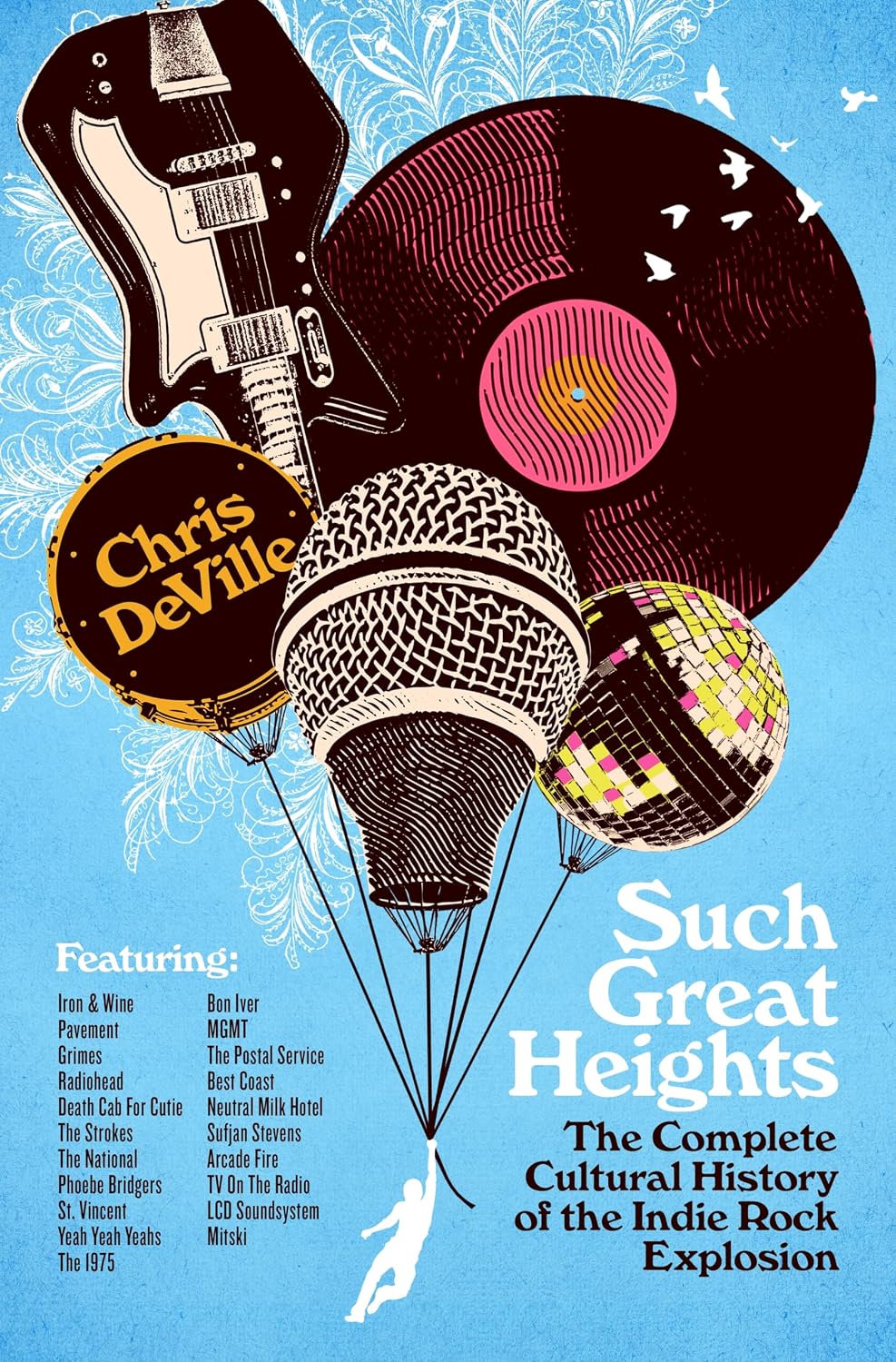
I skimmed this library book but read enough of it to count, I think.
The Onion headline: Two Hipsters Angrily Call Each Other “Hipster” (35)
“The hipster is that person who in fact aligns himself both with rebel subculture and with the dominant class, and thus opens up a poisonous conduit between the two.” (quoting Mark Greif, p. 35)
He has “a disdain for normie monoculture” and “a relentless pursuit of authenticity.”
“Gentrification was a huge aspect of the post-Y2K hipster experience.” (36) Artists moved into blighted neighborhoods “in search or cheap rent and bleeding-edge authenticity.”
Death Cab on the O.C., The Shins on the Garden State soundtrack – indie’s success meant it no longer required an obsessive pursuit. It became background music. (60)
“The only way to maintain an undisturbed ecosystem with unthreatened traditions is to remain completely underground, insulated from outside influence… which seems counterproductive if the goal is to maintain a vital creative commerce rather than an ingrown preservation society.” (62)
Indie rock became “a lifestyle to be sold.” (64) Michael Cera, Juno, Zooey Deschanel. Pitchfork, CMJ. Napster. (Resnet, Hobbes, MP3 blogs.)
“To embrace emo was to give up all pretence of ever becoming hip.” (115)
Sufjan, Wes Anderson, Dave Eggers, Paste. Artisinal chocolates, mustaches, Etsy, farmer’s markets. Cult films. I like these things until I hear them as a list, and suddenly they are repulsive. Indie-yuppy. Starbucks.
“It makes sense that it caught on, but nowadays, more than any other Bon Iver song, Skinny Love feels like a harbinger of far more annoying bands that emerged in [Justin] Vernon’s wake.” (175) “… It laid the groundwork for a generation of performative rustic hit-makers who shot to fame by stomping, clapping, and yelling ‘Hey!’” Yes.
I read this book as I was also reading “Against the Machine” (Paul Kingsnorth) and “The Morality of Everyday Life” (Thomas Fleming). From one of those books, I got this life-cycle of a culture:
- a new culture begins in a place, representing an idea
- the idea is fulfilled
- it calcifies (civilization, monuments, buildings, empires)
- the underclass is unhappy
- a Caesar arises
- it collapses under the weight of tyranny
So I tried to map the history of Indie music to that timeline:
- Nirvana (new culture in Seattle)
- Idea: DIY, “disdain for normie monoculture”
- Idea fulfilled: mixtapes, zines
- Calcification: Gentrification, Death Cab, The Shins. Money. Indie rock becomes a lifestyle to be sold.
- Unhappy underclass: ??? Not sure here
- Caesar: Mainstream big labals
Who is the unhappy underclass? Possibly whoever starts a new music genre around a new idea.