Deliverance
May 11, 2026
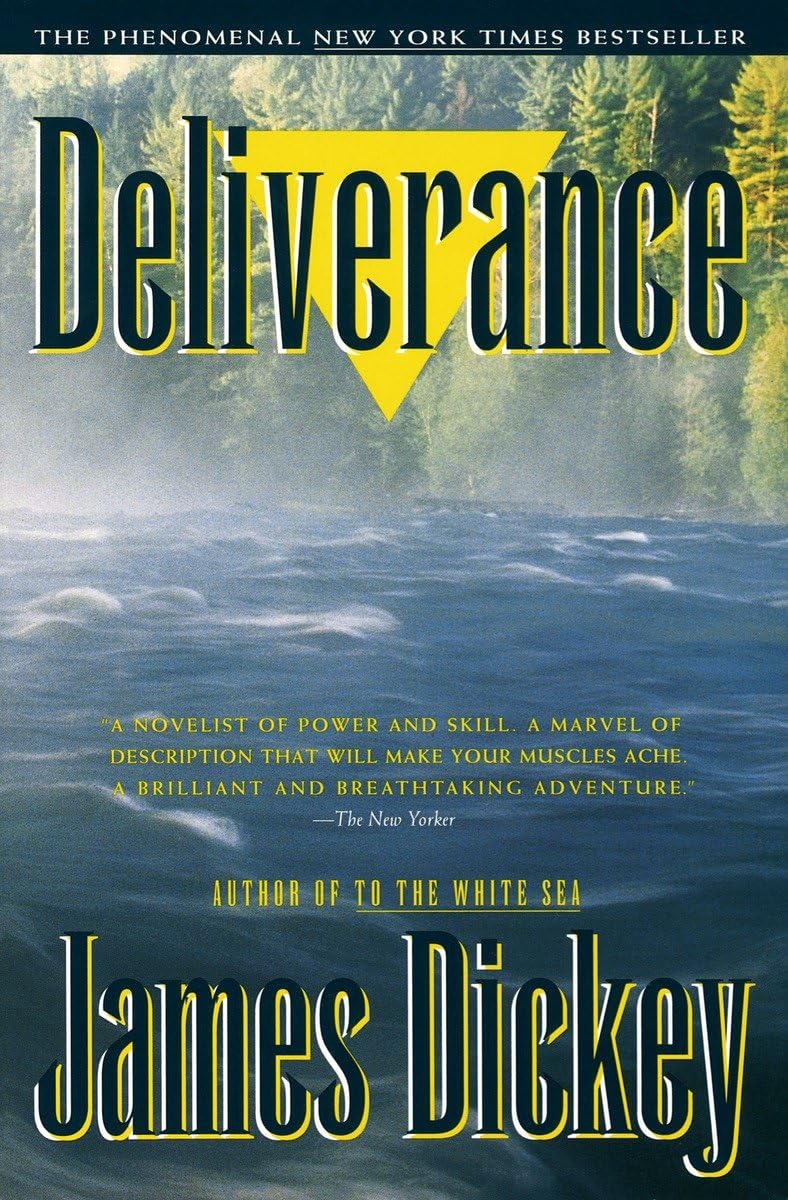
Deliverance
by James Dickey
Spoilers below. We meet Ed (the narrator), Lewis (kind of charismatic and outdoorsy), Bobby, and Drew (obvious redshirts). They are men with jobs and normal lives, seeking a taste of adventure and camaraderie. A dam is soon to be completed that will flood the valley, but right now it is wild, like some place in Alaska. Lewis convinces them to all go on a canoe trip through the valley. He says if they take Friday off, they’ll be back home by Sunday afternoon…
“Lewis wanted to be immortal.” (9) But he’s also the first to take a chance, like he was looking to avoid immortality “by means of an accident, or what would appear to others to be an accident.”
“I knew I had to live up to the equipment or the trip would be as sad a joke as everything else.” Ed has a good life, a loving wife and son, a solid job, respect. But he’s at least somewhat discontent, looking for “deliverance.” (35, cf. 28) But – p. 36 – what he really wants is simply to sleep a little longer and go to work.
Ed says he is “mainly interested in sliding…living by antifriction.” Lewis: “You don’t believe in madness, eh?” (41)
Lewis’s overconfidence: When they’re driving down to the river, he leads, but he doesn’t know the way. The rednecks following him just stop when he makes a wrong turn, knowing he’ll have to turn around and come back. “Where you goin’, city boy?” they tease him. He tells them to go on and lead. “Naw, naw, go on ahead. You’ll find it. Ain’t nothin’ but the biggest river in the state.” (67)
So they canoe down the river. At one point, the lead canoe with Ed and Bobby gets a little far ahead, so they pull to the shore. They are set upon by two hillbillies with a gun. This scene is terrifying and so well written. The point where Ed realizes they’re going to do whatever these men tell them to: “I shrank to my own true size, a physical movement known only to me.” (108)
Sometimes a sentence is doing something I can’t put my finger on. At one point Lewis tells them his leg is broken (147), and there’s this sentence thrown in the middle: “The water where we were did not change.” Like, the river didn’t react to that information. It’s easy to read over stuff like that and not even notice it, but it’s doing something.
Standing over Hillbilly 2’s dead body: “You can do what you want to; nothing is too terrible.” He just sings. “I finished, and I was withdrawn from.” Like a possession. Now he comes back to himself.
They dump Draw in the river. “We were free and in hell.” (220)
“I was dreading going back to men and their questions and systems.” (228)
Drew’s widow. “All right, she said from far off, from the future, from all the years coming up, and from the first night alone in bed.” (272)
Overall this was very well written. The evil of the men in the woods was chilling. I’m sad at the ending. Ed didn’t receive deliverance – he has a secret sin that he’ll take to the grave and then pay for.
I’m not sure whether he did anything wrong under the circumstances, but it was wrong to cover it up. And even after barely surviving the river, he takes that model out to dinner a couple of times, rather than thanking God for his life and clinging tighter to his family.
It doesn’t bother me that the book lacks a neat moralistic ending. But it bothers me that Ed seems fine with how things turned out, untroubled by the cover-up, self-justifying. That is deadly and something he does need to be delivered from.