Beowulf
September 6, 2025
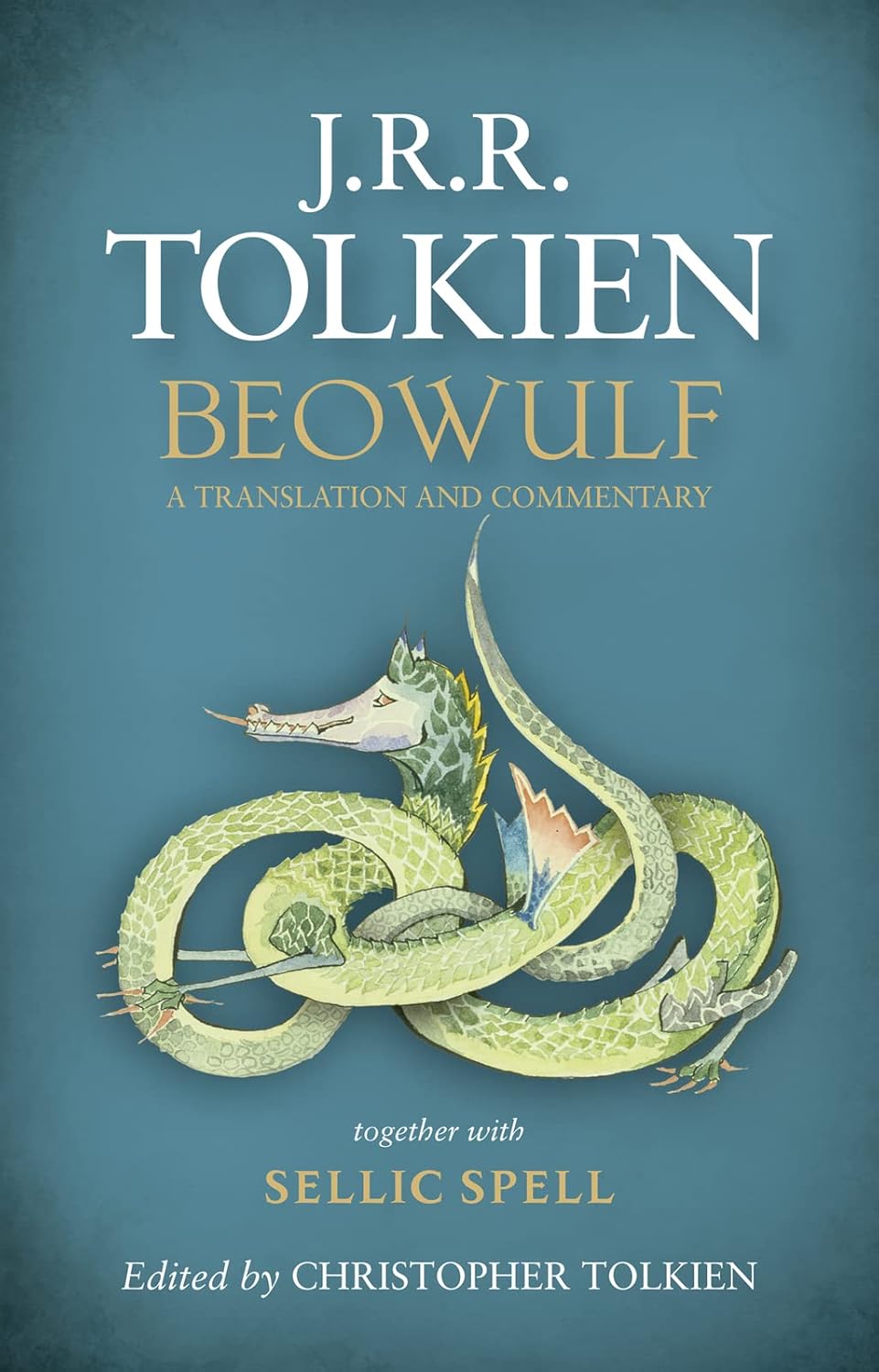
Beowulf
by J.R.R. Tolkien
The only other Beowulf translation I’ve read was Seamus Heaney’s (in 2013). It was great – epic and understandable. This one was harder to follow, at least in parts.
Hrothgar, son of Scyld Scefing (“Sheefing,” I think) becomes king of the Spear-Danes when his father dies. He builds a hall, Heorot.
The descendants of Cain were “all evil broods… ogres and goblins and haunting shapes of hell, and the giants too…” Thus came Grendel, who “inhabited long while the troll-kind’s home.” (16)
Geats come, knights of king Hygelac, led by Beowulf. They are over and over called the “windloving Geats” or “windloving folk.” They sure do love the wind, apparently.
The translation can be wooden and challenging to parse. Here’s an example:
I tell thee for a truth, son of Ecglaf, that never would Grendel have achieved so many a deed of horror, fierce slayer and dire, in thy lord's despite, humbling him in Heorot, if they heart and sould were thus fell in war as thou thyself accountest. Nay, he hath found that he need not greatly dread avenging wrath nor dire pursuit of swords from your people of the conquering Scyldings! Forced toll he levies, none he spares of the folk of the Danes, but followeth his lust, slays and ravishes, for no vengeance looking from the Spear-Danes. (29, lines 478-487)

Like, I can read that, but it is not the quickest thing to get through. No skimming here!
Sometimes the word order is unusual, as in line 1542: “Never heard I of years so young a man discourse more wise.”
Unferth recalls a story from Beo’s youth – a swimming contest with Breca, which Beo supposedly lost. Unferth is jealous of the Geats getting glory for fighting Grendel. Beo says he slew 9 sea monsters with his sword while swimming in that contest.
“But he there wakeful in his foe’s despite abode grim hearted the debate of war.” (Line 577) What? I think “despite” means “defiance” here or something like that. Same word is in the quote above.
The Geats sleep at Heorot. Grendel comes, eats one of them (Line 600+), grapples with Beowulf. Others attack with weapons, but Grendel “laid a spell… upon every blade” (35). But Beowulf rips his arm off, and Grendel flees.
“Grendel’s mother, ogress, fierce destroyer in the form of woman.” (49) She came to Heorot for revenge, killed Æschere and took Grendel’s arm.
The language Tolkien uses paints starkly. Grendel and his mother are described as full of misery, dreadful, children of Cain, outlaws, “shunning the mirth of men,” doomed, outlawed by hate, creatures of hell, enemies, of the house of death, grimhearted, ravenous, woeful, avenging, with old ills returned.
Beowulf is a fierce slayer, with the “might of his valour,” a gift from God, trusting in the One God for mercy, succour, and aid.
Grendel’s mother: murderous, backward steps, gloats over her prey, cruel, mighty stalker, alien, miscreated, exiled.
Beo’s sword is called Hrunting, lent to him by Hrothgar. He fought Grendel bare-handed – Grendel had an enchantment making weapons against him useless. But going out against G’s mother, “For myself glory will I earn with Hrunting, or death shall take me.” (56)
Hrunting fails him (line 1276), but he finds another sword, “the work of giants,” (L-1307) and slays her. Grendel’s body is there; Beowulf beheads him (59). Grendel’s blood melts the sword (? L-1352+). Beo keeps G’s head as a trophy (L-1351).
Beowulf’s sword is “the work of trolls” (62). He gave it to Hrothgar.
So, Beowulf kills Grendel’s mom, then boats off for Geatland. This is only halfway through the story.
Beowulf reports to King Hygelac and Queen Hygd. He describes Grendel’s pouch made of dragon hides, where he saved the bones of his victims. “His pouch hung down; deep was it and strange, made fast with curious thongs; with subtle skill it was all contrived by fiends’ craft wrought of dragon-hides. Therein did he, doer of deadly deeds, desire to thrust me all unoffending, adding one more to many.” (74)
Beo recounts his adventures, giving gifts to Hygelac (horses, etc.). He had formerly been thought little of; now he is honored. When Hygelac is killed by the Scyldings (77), Beowulf becomes king for fifty years.
Then we get PART TWO of the story. A dragon. Some thrall steals a goblet from his hoard, and the dragon begins terrorizing the Geats.
I should have counted how many times they’re referred to as “the windloving Geats.” It’s at least ten. Why do they love wind so much? I think wind is okay, I guess.
In the end, as an old man, Beowulf dies fighting the dragon. His spirit was no longer “in flesh entrammelled” (entangled). His sword (Nægling) failed him against the dragon. His final thoughts are given (L-2292ff):
This people have I ruled for fifty winters -- no king was there, not one among the peoples dwelling nigh, who dared with allied swords approach me, or threaten me with warn's alarm. In mine own land I faced what time brought forth, held well mine own, nor pursued with treachery cruel ends, nor swore me many an oath unrighteously. In all this may I now, sick of mortal wounds, have joy, for that the Ruler of men hath not cause to charge me with cruel murder of my kin, when my life departeth from my body. (92-93)
Basically, his thoughts are that he discharged his duties well, dying without mortal sin. On the other hand, you could read this as, “I’m a good person – at least I never killed any of my relatives!” Is that the bar for valor in epic tales? I hope on my deathbed I’m contemplating the good works of Christ and not my own sorry attempts.
Beowulf does kill the dragon but is struck mortally with its venom. “Swiftly did he perceive, that in his breast within the venom seethed with deadly malice.” (L-2277)
“Wiglaf, Wihstan’s son, by Beowulf sits, the brave living watching the brave dead.” (97) Wiglaf and seven others took the spoils from the hoard, threw the serpent over a cliff (L-2626), and then there was a funeral for Beowulf. He was placed on a pyre (2631), and the body’s bony house was crumbled in the blazing core." They sang laments. They built a burial mound for him, burying some of the treasure, “where yet it dwells as profitless to men as it proved of old.” (105)
In the notes, on p. 111, there is something about the “windloving Geats.” They are named variously the Storm-folk, Storm-Geats, Windloving folk, Windloving Geats, Sea-Geats.
What manner of creature is Grendel? Three solid pages of notes on this, beginning on p. 167. A helrún, hell + rún, i.e. a “hell secret.”
Did the author think these pagan heroes could be saved? See pp. 170-73, 177-78.
Vocab
- contemned - despised (76)
- dight - dress, adorn (66)
- entrammelled - entangled (84)
- fell - cruel, fierce, vicious. “One fell swoop” (Macbeth). “fello” = villain (Latin), hence “felon.”
- fen - marsh
- mere - lake, pool; Grendel sulks off to a pool to die (43)
- minished - diminished (52)
- sward - meadow (L-1575). I just learned this word from Gates of Fire!