DNF: The Story of Christianity: Volume 1: The Early Church to the Dawn of the Reformation
December 27, 2025
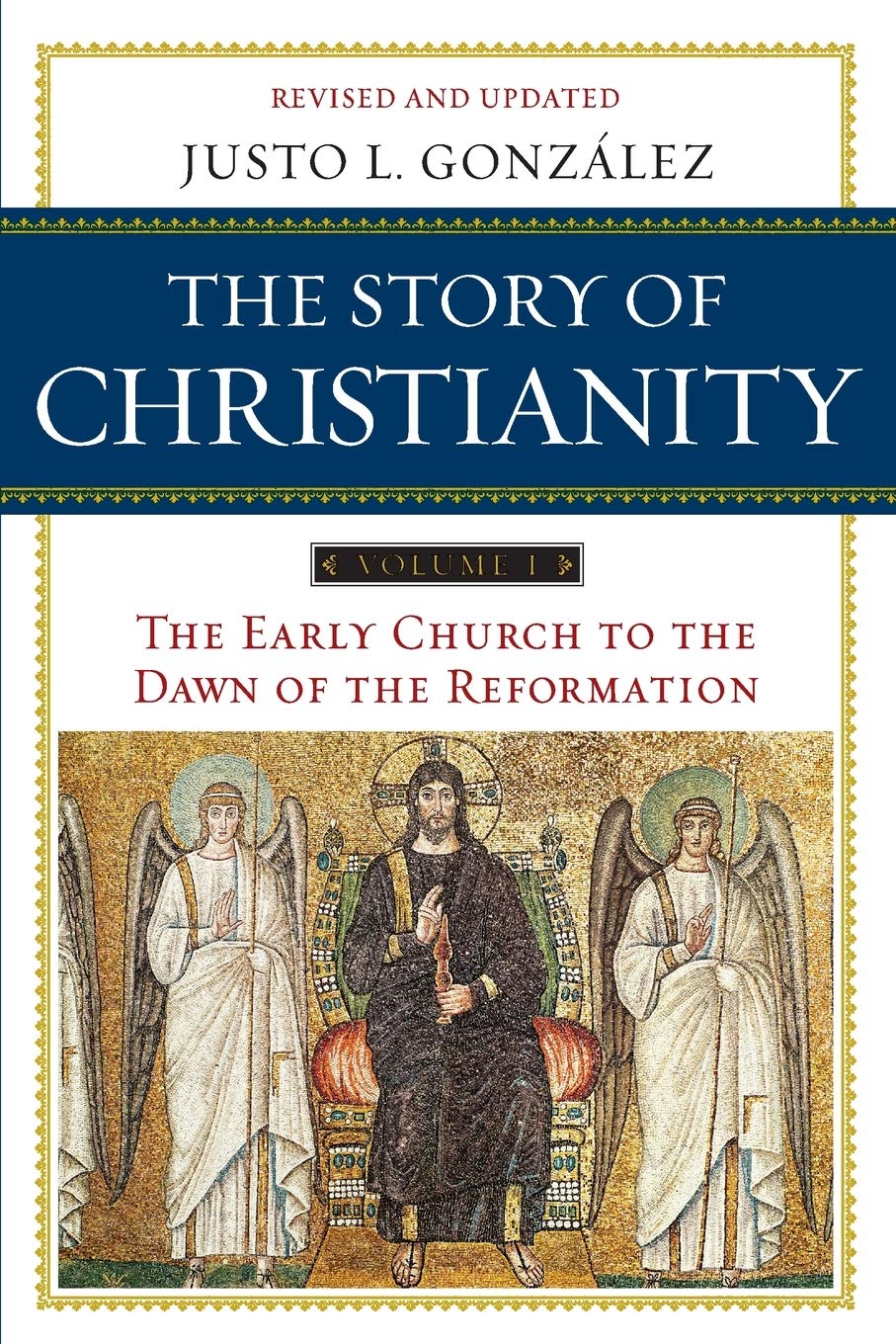
I read about half of this. It was good, but I needed to return it and got what I wanted to out of it. Here are my notes:
“To tell the story of those to whom we are heirs is to write a long preface to our own life stories.” (Preface)
The LXX came from Alexandria (main city in Egypt). (18) Jewish Diaspora meant many Jews were forgetting Hebrew, so they needed translations of the Scriptures. The legend is that 70 translators worked independently, then found that all their translations matched perfectly.
Stoicism: The Stoics “were materialists who believed that all things were made out of fire, and determinists who were convinced that all they could do was to train themselves to assent to the inexorable laws that tule events.” (23) They wise person seeks apatheia - life without passions.
In Jerusalem, conflict between two sets of Jews, Hebrews and Hellenists. Hellenists were not Gentiles, just Jews open to Greek influences (Acts 6). (25)
“It is clear, from the enormous difference in their use of the Greek language, that the John of Revelation did not write the 4th Gospel.” He says there was a second John, a first century teacher in Ephesus. (I looked into this a bit online, and I’m not convinced.)
June 18, 64 AD - fire in Rome. Lots of rumors that Nero started the fire. He needed someone to blame. The areas not affected included Jewish and Christian areas, so he began to persecute Christians. Likely killed Peter and Paul. Nero killed himself, 68 AD. Tacitus records the pagan opinions of Christians - “their hatred of humankind.” (44-47)
Emporer Trajn set the policy that held throughout the second century. Christians were not to be sought out for punishment, but if someone was accused, they had to worship the emperor and curse Christ or die. Punished for obstinancy, not crimes.
Re: studying classic literature, Tertullian: “What does Athens have to do with Jerusalem? What does the Academy have to do with the Church?” (63) Versus Justin Martyr, who said whatever good is in the classics comes from Christ and so is useful to Christians.
Docetism - derived from the Greek for “to seem.” A heresy that Christ wasn’t human but only seemed so. Gnostic. (72)
The NT canon developed over time by consensus. In response to Marcion. The Gospels, Acts, and letters of Paul were quickly agreed on, with more being accepted over time. (75-76)
The Apostles’ Creed was put together in Rome around 150 AD. Called “the symbol of the faith.” (77) “Symbol” meant “a means of recognition, such as a token that a general gave to a messenger, so that the recipient could recognize a true messenger.” Any who confessed this creed were not Gnostics or Marcionites.
God, the Father Almighty. Pantokrator. He reigns over all, including this physical world. Gnostics did not believe this, and the term is chosen so as to root them out.
“Born of the Virgin Mary.” Christ did not simply appear on earth. Marcionites did not believe He was born.
“Pontius Pilate” - a real historical event
Apostolic succession mattered as a response to heretics. Gnostics claimed Jesus had a secret knowledge. The church said, if that’s true, who would He have passed it to but His disciples? And since we can show apostolic succession, and Gnostics can’t, no one should believe the Gnostics when they make this claim. The issue was to agree on one faith and to show it was the faith of the apostles.
Marcion - son of a bishop, active c. 144 AD, founded his own church with bishops which lasted several centuries! He said: the world is evil, so its creator must be evil or ignorant. God the Father of Jesus is not the same as Yahweh. God wanted only a spiritual world. Jesus did not become man (which would make him subject to Yahweh), but simply appeared an a grown man. Not made of flesh. The OT = the word of Yahweh, an inferior god. (73ff)
Teachers of the Church (ch. 9):
Irenaeus - Bishop of Lyons, France, martyred 202 AD. A pastor first.
Clement - born in Athens to pagans, converted. Found Paneaenus, who taught him the faith in Alexandria. Fled persecution in 202, went to Syria and Asia Minor, died 215. Not a pastor, an intellectual, scholar, apologist to pagans. He referenced Plato. As the Law was given to the Jews, so (he said) was philosophy given to the Greeks. Both pointed to the same (one, only) truth.
“Go beyond the literal meaning of Scripture.” “Elitist theology.” He was more calling Christians to philosophy than calling pagans to Christ.
He is the author of the hymn Shepherd of Tender Youth, the oldest Christian hymn whose authorship is known.
Tertullian - born in Carthage, lawyer, converted at age 40. Wrote “Prescription Against the Heretics.” A “long-term prescription” was a legal term. A party in undisputed possession of a property for a certain time became its legal owner. Tertullian applied this to the Scriptures: “For several generations, the Church has used the Bible, and the heretics have not disputed its possession.” So they have no right to use the Bible - it belongs to the Church! Like squatters’ rights!
Seek the truth, but when you find it, stop seeking. Tertullian rejects mixing pagan philosophy (Plato, etc.) with Christianity.
He became a Montanist in 207.
He proposed the formula, “one substance and three persons” for the Trinity. And Christ having “two natures.” “Tertullian coined the formulas that would become the hallmark of orthodoxy.” (92) The first Christian theologian to write in Latin.
Origen - born in Alexandria. Died at age 70 after persecution, torture under Decius. A prolific writer, “it is even said that at times he would simultaneously dictate seven different works to as many secretaries.” (94) A student of Clement. Christian parents. Read Genesis as two creations - a spiritual one, then (because of sin) a physical one. At times “more a Platonist than a Christian.”
Persecution was up and down, not terrible until Decius. An edict required all to worship the Roman gods. Do so, and you receive a paper (a libellum) to certify it. If you don’t have the paper, you can be arrested. Decius didn’t really want to kill Christians, he wanted to unify the empire. Many Christians capitulated. Those who did not received a new title: Confessor. (102)
Cyprian - Bishop of Carthage. Admired Tertullian, called him “the master.”
“No one can have God as Father who does not have the Church as mother.” (104)
Dealing with those who lapsed under persecution – some wanted to forgive and readmit, others wanted to maintain purity. Concerns over purity would lay the groundwork for the penitential system which the Reformers fought against.
Early in the second century, Pliny (governor) told Trajan that he had ordered “two Christian female ministers” to be tortured. (???, 114)
The second century church performed illegal marriages. Christians were married in the eyes of the church. Because Christian women of higher society wanted to marry Christian men of lower, and the laws in Rome would have stripped the women of some rights. (115)
Constantine - After his “conversion”, he still participated in some pagan rites, and no one said anything. He was not baptized until on his deathbed.
Eusebius - wrote Church History. A contemporary of Constantine. Waffled on Arianism, wanted unity, didn’t get what was at stake.
The early church wondered how the rich could be saved. (154) After Constantine, “riches and pomp” were seen as “signs of divine favor.”
The word monk comes from the Greek monachos, solitary. (161)
“Many anchorites would go for years without taking communion.” (164) For others, churches were built nearby. So many fled to the desert to seek wisdom, “the desert was more populated than some cities.”
St. Martin - Born 335 in Hungary. Served in the army of Julian the Apostate. Divided his cape in half to share with a beggar. Cape = capella, origin of the words “chapel” and “chaplain” because it became a relic that chaplains would carry into battle, and it was kept in a chapel to be honored. (170)
People wanted to elect Martin bishop. Some opposed - he dressed poorly, was disheveled, would “damage the prestige of the office of bishop.” After some discussion at a meeting, they flipped open the Bible at random to Psalm 8:2, “out of the mouths of babes…” It’s a sign! Martin was elected Bishop of Tours.
For the Donatists, holiness of the church consisted of holiness of its members. For their opponents, it was grounded in the holiness of its Lord.
Julian the Apostate - cousin to Constantine. At the time of Constantine’s death, most of his close relatives were massacred. Julian was spared because he was only six years old and unlikely to lead a rebellion. Constantine’s three sons ruled: Constantine II, Constantius, and Constans (very creative!). Eventually, only Constantius, and when he died, Julian became emperor in 361.
Julian was baptized, received Christian instruction. But he abandoned it for Greek religion and philosophy. He tried to restore paganism. Made massive sacrifices. Restored temples. Clergy were reorganized hierarchically (an idea he borrowed from Christianity). He did not decree Christians were to be persecuted. But some were martyred by mobs or zealous local officials.
He wrote a (now lost) book, “Against the Galileans.” Since Christians claimed the destruction of the Temple fulfilled OT prophecies, Julian decided to rebuild the Temple! But he died (in battle, by a Persian spear) before he could do it.
Athanasius - His enemies called him “the black dwarf” (199), because he was dark and short. He wrote:
- The Life of St. Anthony
- Against the Gentiles (ie, pagans)
- On the Incarnation of the Word
Constantius said, “My will, also, is a canon of the church.” He exiled Athanasius, who hid in the desert with monk friends. When Julian became emperor, he didn’t care about the Arian controversy, so he cancelled all exiles.
Controversy: homoousios - of the same substance, vs. homoiousios - of a similar substance. We confess Christ is “of one substance with the Father.”
Hymns to affirm the Trinity:
- O Splendor of God’s Glory Bright, by Ambrose, 339-397 AD
- Of the Father’s Love Begotten, by Aurelius Prudentius, 348-413
The Great Cappadocians
- Basil the Great
- Gregory of Nyssa
- Gregory of Nazianus
- Macrina
Macrina (the oldest) was the sister of Basil (middle) and G of Nyssa (youngest).
- Ambrose
- Chrysostom
- Jerome
Jerome - Augustine wrote to Jerome. His Vulgate (Latin translation of the Bible) translated the plant in Jonah as “ivy,” but the LXX has the word for “gourd.” This led to “a riot” at a certain church! Jerome defended his translation, calling his opponents cucurbitarians (“gourdists”).
Sick of opposition in Rome, he moved to Bethlehem and started a monastery. That’s mostly where he worked on the Vulgate.
Augustine developed the “just war” theory. For a war to be just not be motivated by territorial ambition, must not be a mere exercise of power, and must be waged by a properly instituted authority. No personal vendettas. The motive of love must remain central.
Rome fell in 410 AD. Many blamed the Christians for angering the gods. Augusting wrote City of God in response.
Even before the time of Christ, most Jews spoke Aramaic, not Hebrew. Could not understand the scriptures being read in the synagogue. Targums were ancient translations of the Hebrew scriptures into Aramaic.
“Pope” means father. Originally, any respected bishop might be called “pope.”