Mission at Nuremberg: An American Army Chaplain and the Trial of the Nazis
January 20, 2024
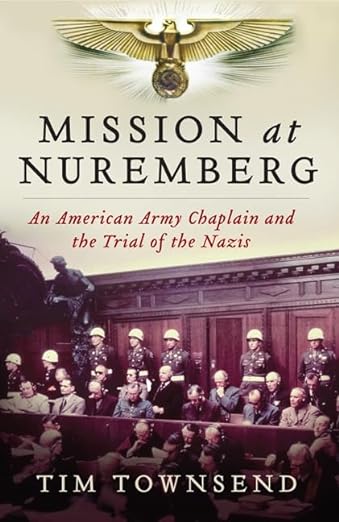
LCMS pastor Henry Gerecke enlisted with the army at age 50 to serve as a chaplain during WWII. He performed that work diligently and was eventually called on to be chaplain to the Nazi leaders standing trial at Nuremberg, including:
- Göring - started the Reichstag fire, ordered the “final solution”
- Keitel - field marshal, commander of the Wehrmacht, oversaw (or allowed) SS death squads (Einsatzgruppen) to conduct the mass murder of Jews in Poland
- Saukel - labor leader, organizer of labor camps
- Ribbentrop - Minister of Foreign Affairs
- Albert Speer - Minister of Armaments and War Production
among others. He was able to commune several of them before their deaths.
But not Göring. Göring mocked aspects of the faith and was not a Christian, although he was a member of the German church. On the night before the executions, he asked Gerecke to commune him, but Gerecke said he could not. “No German pastor ever refused me communion.”
Gerecke was exercising the ban, his one tool for bringing Göring back. He also told Göring that his eight-year-old daughter Edda, a Christian, had said she hoped to see her father again in heaven. Göring said he would take his chances. Gerecke was criticized and wondered later if he had done the right thing by refusing communion; to me it seems very obvious that he did. That night, Göring killed himself by swallowing cyanide. He objected to their mode of execution (hanging), thinking that soldiers should receive a death by firing squad.
Nazi leader remains were not returned to their families but were cremated (as American soldiers with fake names, along with their nooses and black hoods) and disposed of secretly, to remove the possibility of their burial sites becoming shrines for some future Nazi movement. I think of this as a dark parallel to God burying the body of Moses so the Israelites couldn’t worship it as a relic.
The book explains the origin of the word “chaplain” (see Martin of Tours for more; some of this is copied directly from there):
As a new Christian, Martin of Tours was a soldier in the Roman army. Approaching a city gate one day, he met a poorly clad beggar. He cut his military cloak in half to help clothe the man. That night, Martin dreamed of Jesus wearing the half of the cloak he had given away. He heard Jesus say to some of the angels, “Martin, who is still but a catechumen, clothed me with this robe.”
Martin’s half of the cloak became a relic, later carried by kings into battle in the Middle Ages.
The priest who cared for the cloak in its reliquary was called a cappellanu, and ultimately all priests who served the military were called cappellani. The French translation is chapelains, from which the English word chaplain is derived.