Tomorrow, and Tomorrow, and Tomorrow
August 7, 2023
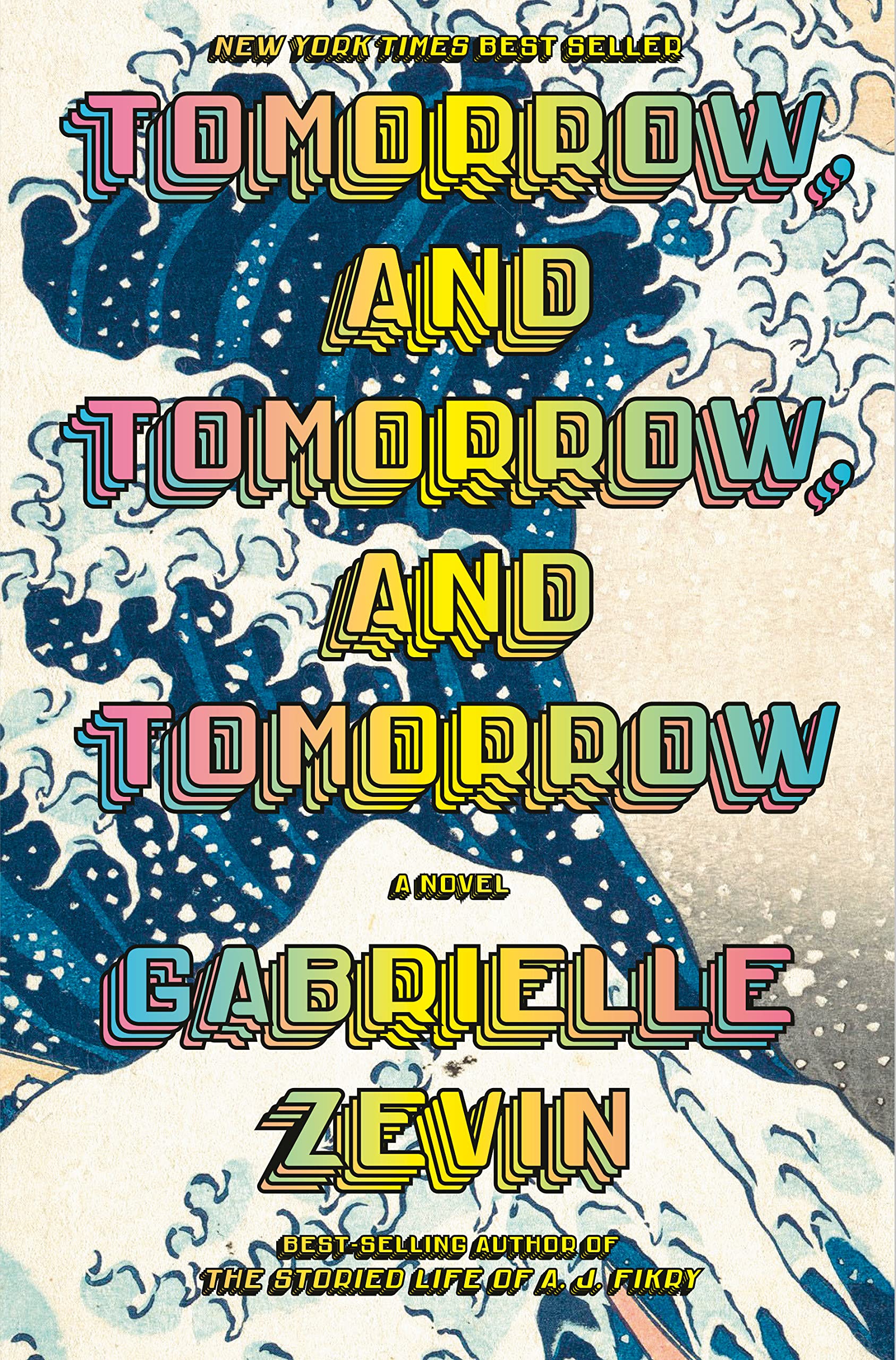
Tomorrow, and Tomorrow, and Tomorrow
by Gabrielle Zevin
People I respect really liked this book. I did enjoy parts of it, and it was compelling, but overall I do not think it is that good. It does have lots of fun sentences, ideas, and vocab sprinkled throughout:
- Sadie, re: Super Mario Bros: “I feel bad for the Goombas. It feels like they’ve gotten mixed up in something that has nothing to do with them.” (16)
- “The kind of laugh that was an invitation: I cordially invite you to join me in this matter that I find amusing.” (58)
- “Other people’s parents are often a delight.” (75)
- Sadie’s students “think their traumas are the most interesting thing about them.” (394)
- “Torschlusspanik” (270): the fear that time is running out and you’re going to miss an opportunity. Literally “gate-shut panic.”
- “Zweisamkeit” (271): the feeling of being alone even when you’re with other people.
She refers to “the heart – the part of the brain represented by the heart” as a mystery. It is taken for granted that the self is really the brain. (5) This is the modern view, but there are other views. Just something small I noticed.
Reading about cultural appropriation (77) irritated me. Am I allowed to look at art from another culture? As soon as I look at it, I’ve absorbed what I like about it. I have appropriated it. This idea of cultural appropriation is idiotic. It’s like saying you can eat the food of another culture, but you can’t let it nourish you. Too late! But Mazer agrees: “I hate that world [one without appropriation], and as a mixed-race person, I literally don’t exist in it.”
Many things irked me by seeming unrealistic. Some details about programming, and especially the way modern progressive sexual ideas show up in scenes decades too early.
Sam typed until his fingers bled (102). But programming is way more thinking than typing.
Nerds who went to Harvard and MIT in the mid-90s who hadn’t played Colossal Cave Adventure? Saying, “Entirely text, no graphics,” as if a text adventure needs explanation? (142) I think the author is younger than her characters. [I looked it up: She is a couple of years older than I am, still younger than the characters, but maybe she didn’t grow up playing Zork, etc…]
Dov programs so hard, he burns out graphics cards… (183)
Sam’s sexual history is another detail, like Sadie and Dov’s S&M, that doesn’t ring true. An Asian boy in the 90s had gay sex, and that’s just thrown in like it’s normal? This is not real. The author is creating these characters, but then forcing them to do things they wouldn’t, to server her own needs. She is more like Dov than like Sadie.
Adding gay marriage to their game lost 50k users but gained 200k more. The seems revisionist. Popular support was nowhere near 4:1 back then (it isn’t even now). The Mapleworld political stuff feels flat. Where is the story here? And the shooting is unrealistic. The despair is not coming from the right.
Marx suggests Shakespeare might be a “they.” This is ridiculous. The scene is in the 90s! (308)
Sadie’s motivations in 1996 (378) – this is good, honest. “A dervish of selfishness, resentment, and insecurity.” If that was 1996, and Telly is now 16, then present day is 2012 at the latest.
If you want complex characters, you have to earn the complexity. Sam is an introverted misanthrope or an energetic presenter as it suits the author. He ignores his foot and wears a giant jacket at one point; later, every choice he makes is aesthetic. This is lazy and makes him feel less real.