Novelist as a Vocation
March 8, 2023
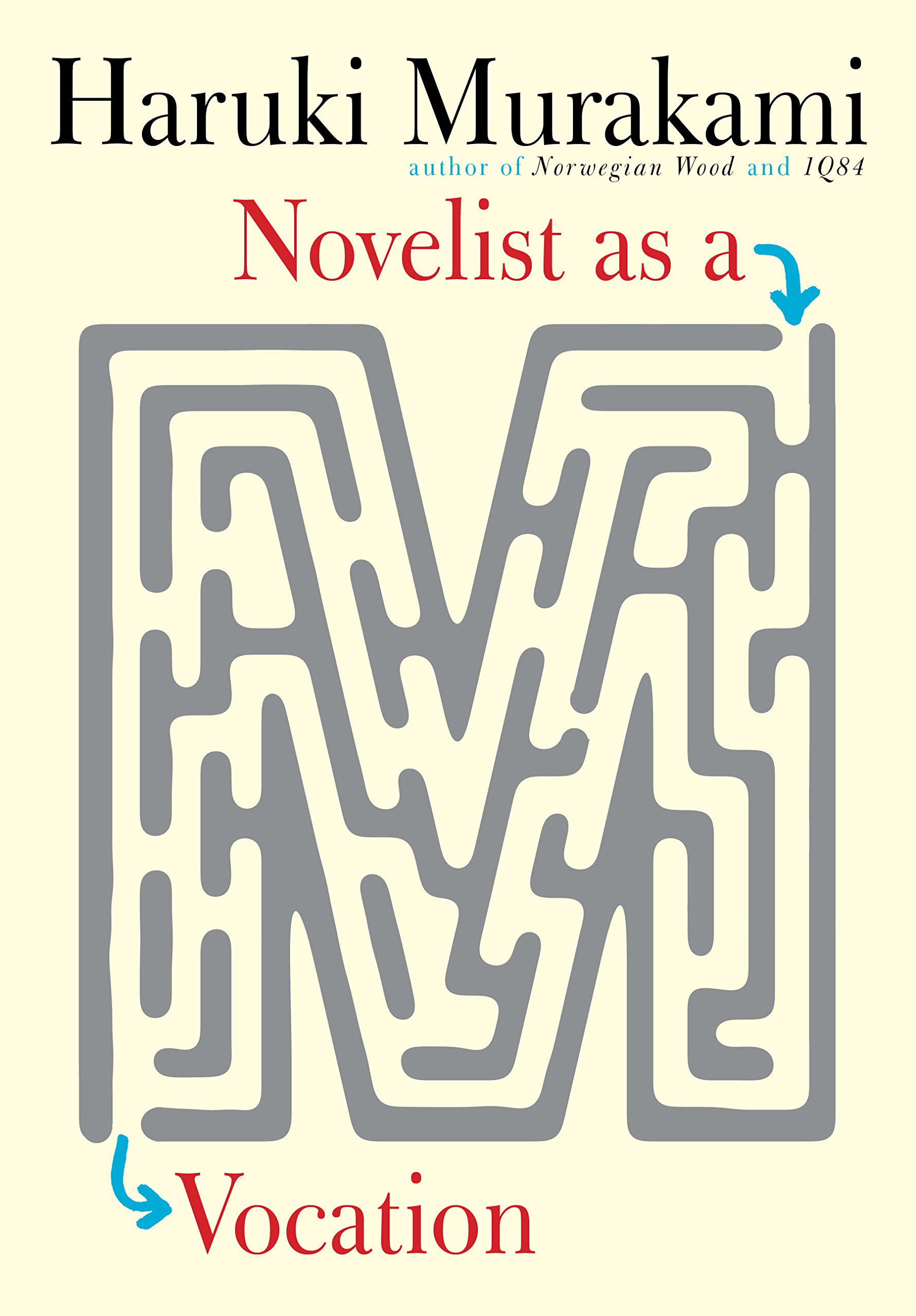
Novelist as a Vocation
by Haruki Murakami
I don’t know that I want to write a novel or would be any good at it. I do find myself reading a lot of books about writing, which is curious. For the most part, I did not care for this one. His experience is not relateable (or even believable, many times!). So much of his success comes off as, “So I just cranked out a bestselling novel, first try, that won some prizes, no big deal.” But there were parts that I appreciated.
“The only way I can think about things in any kind of order is by putting them in writing.” This reminds me of a tweet by Paul Graham: “A company asked why it was so hard to hire a good writer. I told them it was because good writing is an illusion: what people call good writing is actually good thinking, and of course good thinkers are rare.”
HM says novelists are generally more encouraging to newcomers and don’t tend to be gatekeepers.
Having a quick mind does not tend to suit a novelist. “Writing a novel… is an activity that takes place at a slow pace – in low gear, so to speak.” (5)
Many people who write a novel or two never write any more. Perhaps this is why novelists are welcoming to newcomers: they are unlikely to be competitors in the long term.
When HM started his first book, he wrote for a while in English. His smaller vocabulary forced him to write plainly, concisely. He translated a few chapters in Japanese, then continued writing in Japanese, using this new style he had discovered.
The way he presents much of his career is hard to accept. I will buy his story about the baseball game epiphany (which was also in What I Talk About When I Talk About Running). It’s too weirdly specific to make up, like PKD’s 2-3-74 experience. But, after laboring to write “Hear the Wind Sing,” he supposedly sent his ONLY COPY to a literary journal, then forgot about it? This sounds like BS and/or self-myth. (33)
“Novels should emerge in a spontaneous flow…” (35) Does he edit, or is he more like Dickens?
Setting the record straight re: the Akutagawa Prize, which he spends many pages saying he doesn’t care about, he insists that he’s just a regular guy who “tossed off” a novel that happened to win the Gunzo prize. More myth building.
HM says there’s no objective basis for any prize without a “numerical assessment.” It’s just biased opinion. But some writing is better than other writing, and art can be objectively good. Not being to express this numerically is the reason art critics exist, even though the field is flawed.
HM guesses 5% of people are active readers. Industry reports say it’s higher, but I think he’s closer, maybe too high. (46)
“The more I bear my soul, the less believable and more arrogant I sound.” (50) True!
“As countless instances show, it is difficult to properly assess, in real time, new forms of expression…” C.S. Lewis said not to critique genres you don’t personally like. This might include the truly original, or burgeoning genres.
“To reach the source, you have to swim against the current.” –Zbigniew Herbert (63)
His discussion of style – simple, no big words – reminds me of programming. Instead of using a complex, esoteric syntax to fit a paragraph into a one-liner, how about the literary equivalent of the trusty for-loop?
“Who would I be if I weren’t seeking anything?” (68) Sounds wise, Buddhist. But it separates “you” from your vocations and seems narcisistic.
“I don’t make promises, so I don’t have deadlines.” (69)
Advice to writers: Be lucky. Just toss off a novel and win a prize. I never get writers block. I never forget anything important. (77)
Value judgements don’t help you write fiction. Think of bad Christian fiction, or the woke obeisance in everything new these days. On Moral Fiction talks about this, too.
Two principles guided HM (83):
-
Omit all explanations.
-
Connect scenes, phrases, images without conventional logic and literary cliches.
You must retain a healthy amount of writerly ambition. (84)
He calls VERY short stories “palm of the hand stories.” I like that. (91)
Page 95 is more believable: he punches in, writes ten pages, and punches out, no matter what. This is more consistent with things I’ve read from other authors.
If HM’s wife dislikes a scene of finds fault in it, HM tries rewriting it even if he doesn’t agree with the criticism. “When a reader has a problem, there is usually something that needs fixing, whether or not it corresponds to their suggestions.” (100)
The resolve to write and to improve is what’s critical. (103)
A novel takes HM 1-3 years, writing 5-6 hours per day. Then nap, music, reading, 1 hour of outdoor exercise. Repeat, without exception. “Writing a novel is extremely lonely work.” Requires stamina. And the secret to stamina is to become physically healthy. (114)
People expect authors to live stereotypical artist lives, not healthy, quiet lives in the suburbs. Trollope kept his job in the post office.
His career seems basically smooth and easy, without a lot of ups and downs. He makes success as an author sound trivial. Maybe it was, for him. If he personally embraced the spirit of his age, he was moving with the current, and that makes things easy. But can anything important be written that way?