Dickens and Prince: A Particular Kind of Genius
January 3, 2023
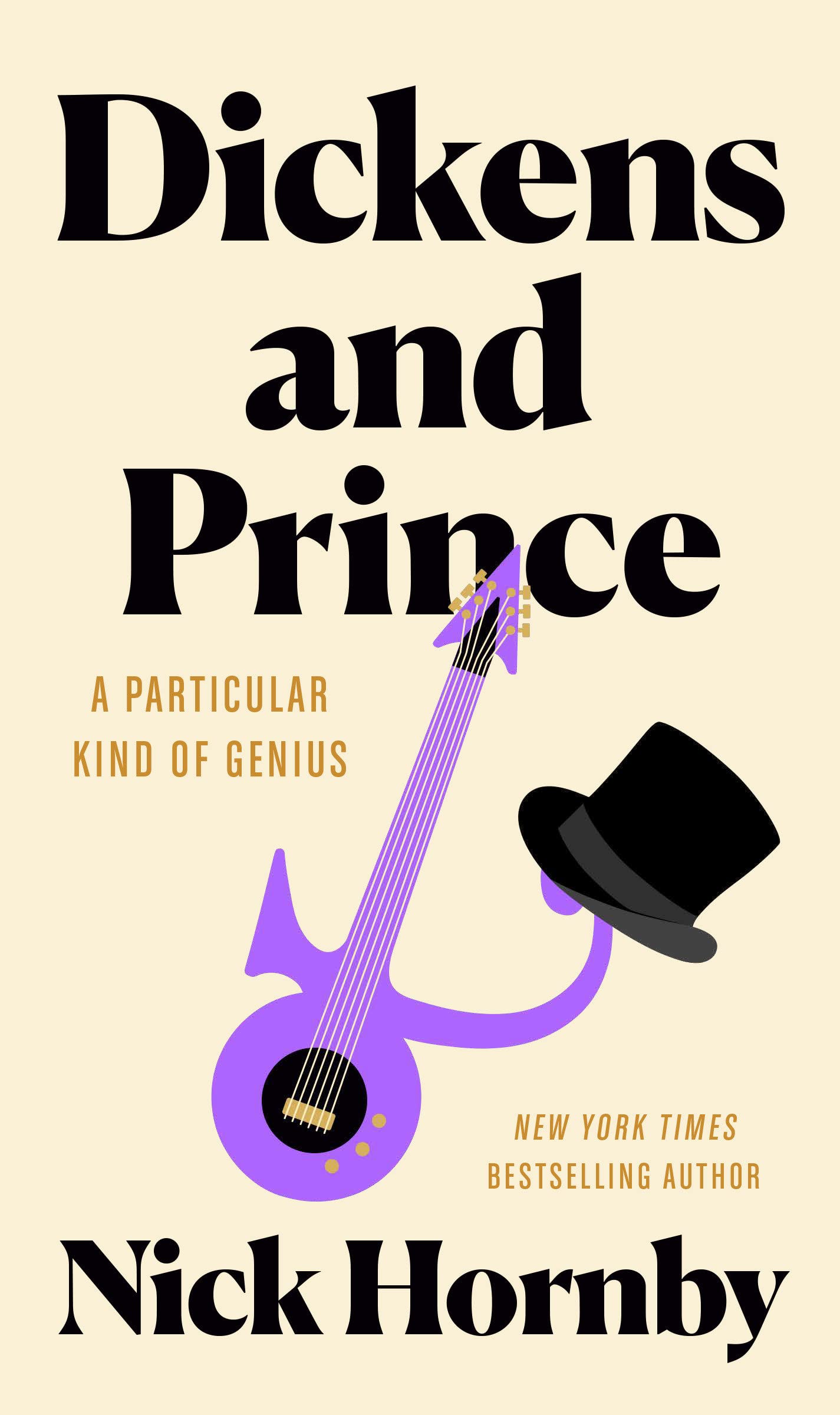
Dickens and Prince: A Particular Kind of Genius
by Nick Hornby
This book (or “extended essay”) is really about work and ambition. NH is not going to list strange coincidences paralleling the lives of Dickens and Prince (like that Lincoln/Kennedy list that goes around). Dickens and Prince are both in his list of “My People,” people who have inspired him to think about his own work. (6)
This got me thinking, who is on my own list? A few names of people who have inspired me in how I work: Wozniak, Feynman, Carmack, Maciej Ceglowski, Cal Newport, Theodore Roosevelt, LBJ, and even Kevin Mitnick. The themes in that list seem to be learning some deeply, not taking shortcuts, not following fads, and working extremely hard.
NH says he would not be a reader without having experienced excruciating boredom as a child. “I read everywhere… mainly because I was bored stupid.” I can completely relate to this. All our family drives to Houston, running boring adult errands. All the time I was waiting on my parents while they did school stuff. Just sitting there with nothing to do leads you to want something to do. If I’d had a phone, I would have been on it, but I didn’t, so I learned to enjoy books.
“My younger sons, both born in the twenty-first century, have never found themselves in the kind of stupor that would cause them to look upon literature as an escape, and though this is a cause for regret, I am also happy for them.” (9) I do feel the regret, but I find it hard not to see this as a tremendous loss.
Making people laugh was important to Dickens. (9) This theme of Mirth also came up in the Jeff Tweedy songwriting book. It’s in Douglas Adams’ essay (speech?) about the Beatles in Salmon of Doubt, too.
Prince and Dickens are both “artists with no off switch,” which is very rare. (15)
In the popular arts, money can’t buy success. (21)
Prince was listening to music as a kid and breaking it down, copying lyrics, seeing how the ideas were expressed. This is like George Steiner saying an intellectual is someone who reads a book with a pencil in his hand. Prince was an intellectual, but for pop music. Dickens was an intellectual about the theater, obsessed with certain performers (his People), learning their performances by heart, etc. Interesting that it was theater, not novels, that helped him develop the skills to be a popular novelist.
Random interesting fact:
Thomas Hardy, born less than thirty years after Dickens and a Victorian novelist (he was a twentieth-century poet, but all his novels were published before Victoria died), drove himself to Marble Arch to see a movie adaptation of Tess of the d'Urbervilles, a piece of literary trivia that never ceases to amaze me. (65)

No lengthy editing or rewrites for Dickens (74) – there simply wasn’t time. How did he do it? Did the constraints of time (publication deadlines) and necessity (feeding 10 kids) help him? (77)
Prince was “addicted to the creative process.” He was not a perfectionist. “You just do it, and whatever it is, it’s perfect! Create, and don’t ponder what you created.” (81) I think there is something to this, but it has to be combined with wanting to make something good. These days, creating an artifact has become so easy that it’s possible to create lots of them without really evaluating their quality.
Both Prince and Dickens were always working on multiple things at once. NH says,
Since I started writing professionally, there has always been something I want to get on with which is not the thing I am working on; I was thinking about the book you're reading now while in the middle of something else, and now that I have started this book, I am also thinking about the next thing. (83)
A good definition of perfectionism: “Perfectionism means the act of doing things over and over again until you’re sick of them.” (84)
Both Dickens and Prince learned that live shows are the place to make your money. Dickens performed a “lucrative reading tour of the Northeast states, seventy-six dates in five months.” (111) Since American publishers were copying and reprinting his work without paying him a dime, this was how he made money in America.
Prince recorded music with any girl he was interested in. “He’d meet a girl and take her back to Paisley [his home] and record a double album with her overnight.” (121) A female sound engineer who worked for him for a long time, Sheila E., explained why he hired so many women: “If you wanted your own way of doing things, you shouldn’t be working for Prince. And women are, it’s safe to say, more inclined to let a man lead.” (122)
Page 126 explains that “of course gender is nonbinary, a spectrum, not two poles.” Are books published in 2022 required to pay fealty to these ideas? Statements like this will age about as well as covid mask mandates.
Dickens had a thing for “young, beautiful, good” women. His “romantic leads tend to be irredeemably drippy… Dora Spenlow in David Copperfield is such a drip that David seems destined to leave her because of her drippiness, but she conveniently dies first.” (133)
NH calls the last decade “the Decade of Too Much of Everything.” (138) E.g., all music is on Spotify instantly.
“Prince’s favorite thing to do after a show was to play another show.” (141) “Once, early in his career, in the middle of a forty-date tour, he asked the band playing at a frat party at the Holiday Inn in Charlotte whether he and his band could play during their break. (Permission was granted.)
*** “The immutable law of culture: If anything popular survives, it somehow becomes the property of the educated elite. The same thing happened to Shakespeare.” (140) It makes you wonder if, 100 years from now, only elites will read Harry Potter.