Nabokov's Favorite Word Is Mauve
August 31, 2021
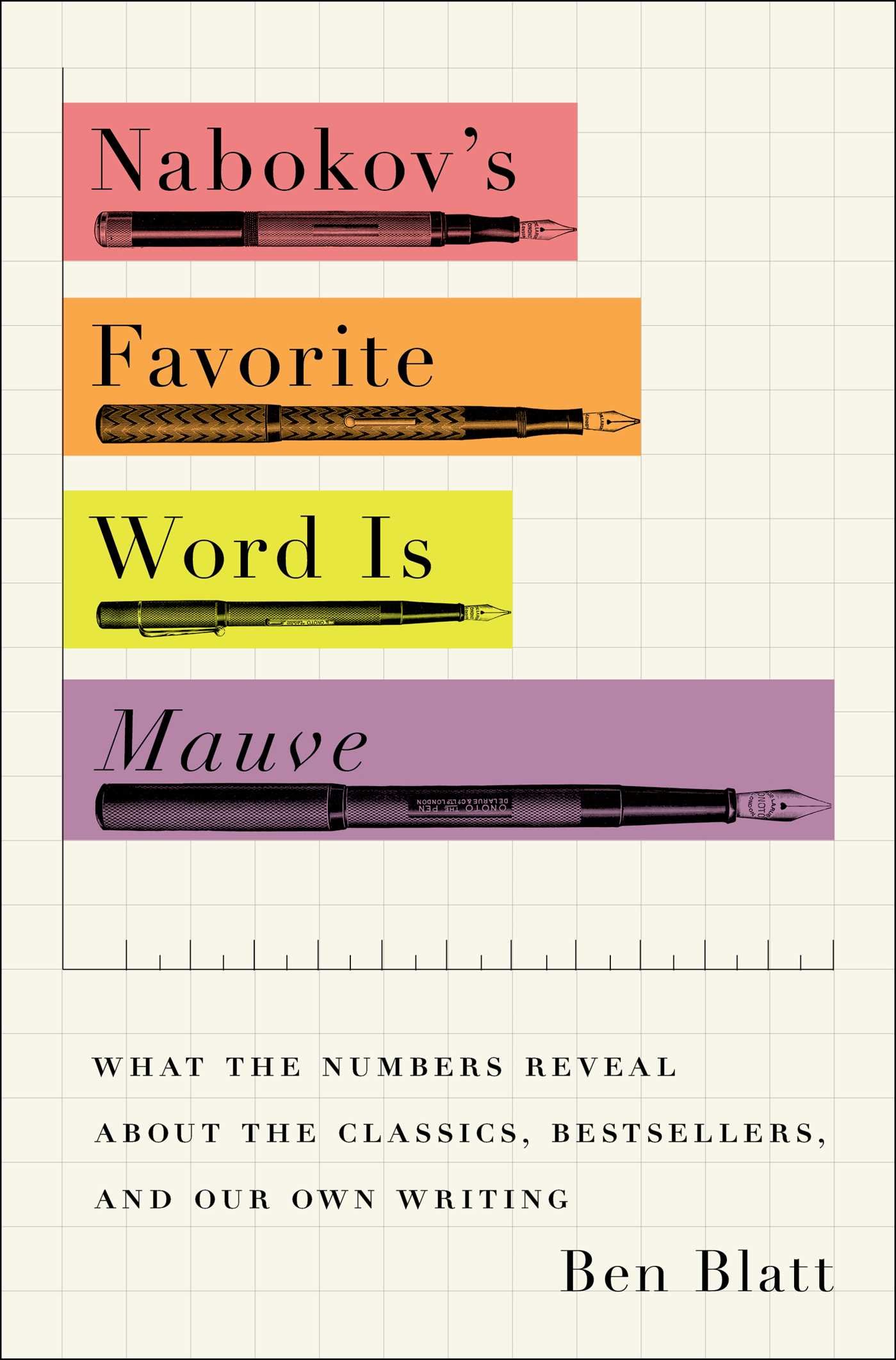
Nabokov's Favorite Word Is Mauve
by Ben Blatt
Another win for the interlibrary loan system. The author applies statistics to the words in books and reports his findings.
In the 1960s, this was done by hand with The Federalist Papers to convincingly show that Madison (not Hamilton) was the author of a particular group of 12 of those essays. Little details gave it away – Madison used “whilst” in over half of his essays (of undisputed authorship) but never used “while.” Hamilton used “accordingly” much more frequently.
Blatt analyzes the use of adverbs ending in -ly, comparing corpuses from award winners, best sellers, and fan fiction (clever!). Not surprisingly (ack!), the professionals use them less often than the amateurs.
In “The Hobbit,” Tolkien used the word “he” just under 1900 times. He used the word “she” once. (Even the animals were all male!)
An “anaphora” is a repeated word or phrase at the beginning of consecutive sentences. Sometimes sloppy writing, other times done for effect.
Asked for his favorite word, Ray Bradbury said he liked the words “cinnamon” and “ramshackle,” and they do appear more frequently in his work than you’d expect. Analysis shows he used “spearmint” (a more anomolous word) way more than expected – “no other author in my sample comes anywhere near Bradbury’s use of spearmint.” I mean, who cares, I guess? But it is kind of interesting. Blatt comes up with a way to identify “cinnamon words” like this, which an author uses more frequently than other writers. Nabokov’s cinnamon word was “mauve.” (I also learned that he had synesthesia, so his more abundant use of color words makes sense.)
There’s a chapter on cliffhangers and one-sentence paragraphs used for effect. To quote: “Not everyone is a fan of these abrupt paragraphs. In a review of Michael Crichton’s Jurassic Park, Martin Amis criticized the novel for having ‘one-page chapters, one-sentence paragraphs, and one-word sentences.’ …It’s clear he considers short paragraphs a cliche of the thriller genre.”
In the epilogue, Blatt says he’s encountered skeptics and doomsdayers. The doomsdayers foresee computers writing books (is that doom?). “The extreme skeptic is uneasy every time they see a number next to a word.” I’m more on the doomsayer side but for a different reason. Since you improve what you measure, I can imagine that whatever stats are applied to literature could lead to literature optimized more for the stats than for achieving an artistic purpose. This is sad, but I’m not worried that all literature will go that route. I think books in general are losing their cultural relevancy as more people watch YouTube videos instead of reading. Give us ten or twenty years, and most of us will be sucking protein slurry through a straw while staring at a screen, as a robot manipulates our muscles to reduce bedsores. Until then, I’ll try to enjoy a book now and then.