Among Others
July 3, 2019
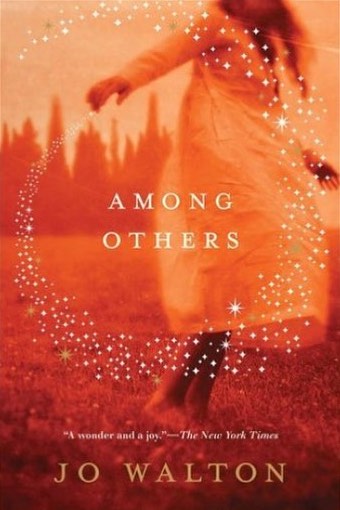
Among Others
by Jo Walton
I picked up a book çalled Lent by Jo Walton on the library’s new releases shelf. It mentioned that she’d won the Hugo and Nebula for Among Others, so I checked that out instead. I wasn’t looking for something to read, but for whatever reason I gave this a shot, and I ended up really enjoying it.
There’s a thing I typically dislike in literature, which is when a character is obsessed with books. This seems self-serving. The author is, no doubt, a book-lover, and her friends are all book-lovers, and anyone who isn’t a book-lover is surely a benighted plebian, etc. etc. This book has that in spades. The main character loves science fiction (shocker!), and the book consists of her diary entries from the late 70s and early 80s, in which she records all the authors and books she loves (or doesn’t). She joins a science fiction book club. She praises the interlibrary loan system.
Of course, the authors and titles she mentions are ones I have generally at least heard of, and they carry a lot of nostalgia for me. That is their purpose for the author and the audience. The constant name-dropping surely contributed to winning the Hugo and Nebula, awarded by judges who grew up reading those same authors. It’s stupid and obvious, but I really can’t say I minded, since I, too, feel that nostalgia, if not as deeply. At one point, my dad had every book every written by Robert Heinlein on our shelves. He’s passed most of them on to me, although I have only read a few at this point. But I understood that Heinlein and Asimov were Important, and I still carry that association. I’m sure there are books on my shelves that my children will see as Important, too.
The story is more than a list of 70s SF authors, though. It involves fairies, a witch, magic, a weird family, an English boarding school, young love, and the main character (Morwenna) became crippled in a car accident and walks with difficulty. I liked her a lot. It did not feel like it was building to a climax – ten pages from the end, the book still felt like it was beebopping along somewhere in the middle. The climax was abrupt, a little confusing, and then things moved on to a very brief denoumont. I guess real life can be like that, too, so I won’t complain.
Interlibrary loans are a wonder of the world and a glory of civilization.

"Bibliotropic," Hugh said. "Like sunflowers are heliotropic, they naturally turn towards the sun. We naturally turn towards the book shop."